

Division 03
Fresh produce,
still cold on arrival.
Harvest to reefer inside 24 hours. Pre-cooled, size-graded and residue-tested at an APEDA-recognised packhouse, with the phytosanitary certificate raised before the truck leaves.
19 standing lines · Sea reefer 0–13 °C · Air freight for short-life lines
Cold chain
The clock starts at harvest, not at the port.
A pomegranate loses more shelf life in six warm hours on a field trailer than in three weeks in a properly set reefer. So the first thing we control is the gap between cutting and cooling.
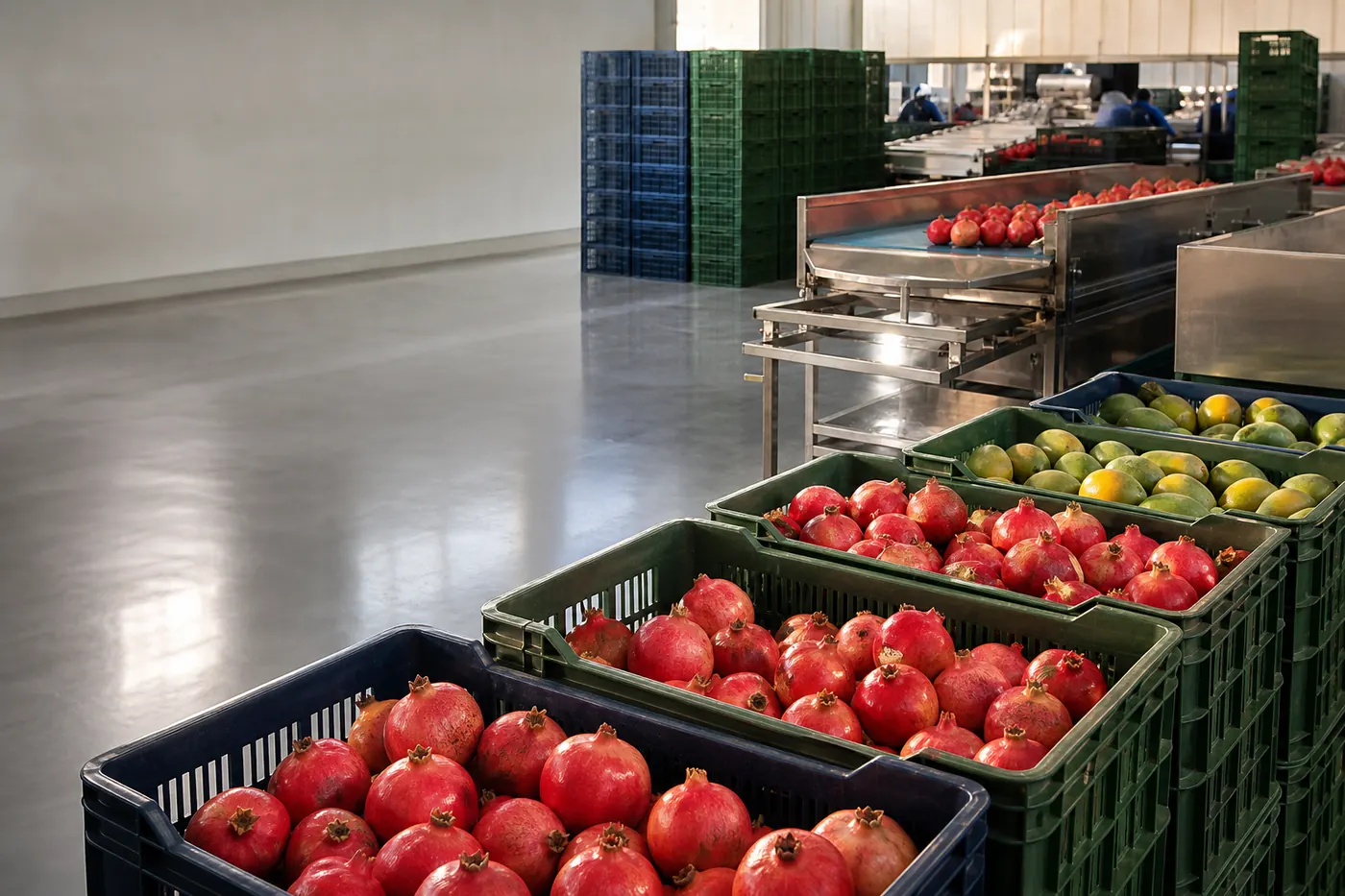
Fruit moves from the farm to an APEDA-recognised packhouse the same morning, is force-air or hydro pre-cooled to its pulp temperature target, graded, packed and loaded into a reefer that has already been pulled down.
- Pre-cooling to target pulp temperature before packing, logged.
- Reefer set-point, ventilation and humidity agreed in writing on the PI.
- Data-logger placed in the container; readings released with the documents.
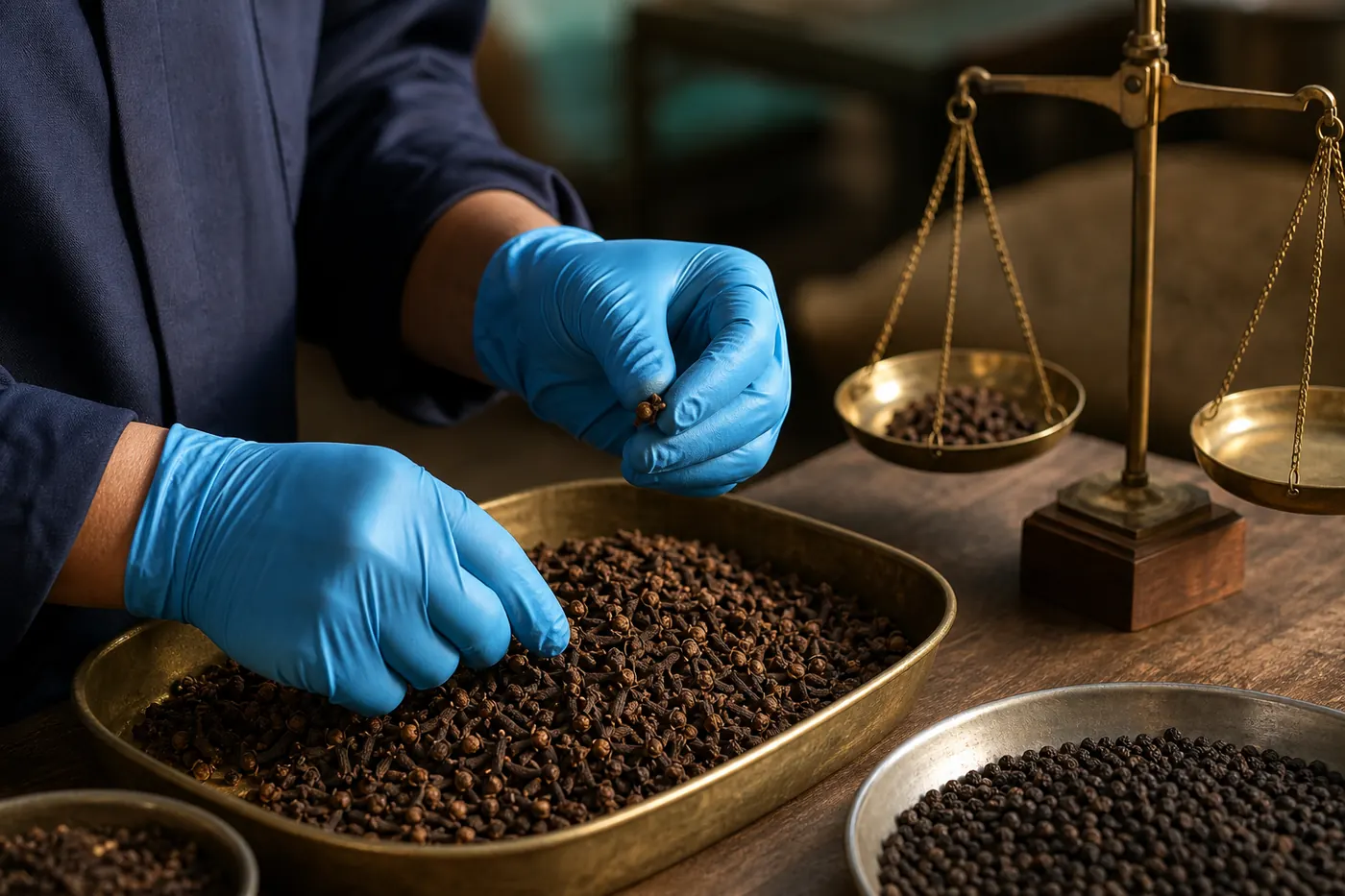
- Residue screening against the destination market’s MRL before dispatch.
The range
Nineteen lines across fruit, vegetables and fresh herbs.
Availability is seasonal and stated on every offer. Tell us your window and we will tell you honestly whether the crop supports it.
Grades shown are the lines we hold most often. Origin, crop year, moisture, ASTA colour, GSM or count are all confirmed on the proforma invoice before you pay anything.
Handling & treatment
Every market wants something different. We ship to whichever rule applies.
Quarantine treatment, temperature and documentation vary by destination. These are the regimes we run most often.
| Product | Treatment | Transit temperature | Typical sea transit |
|---|---|---|---|
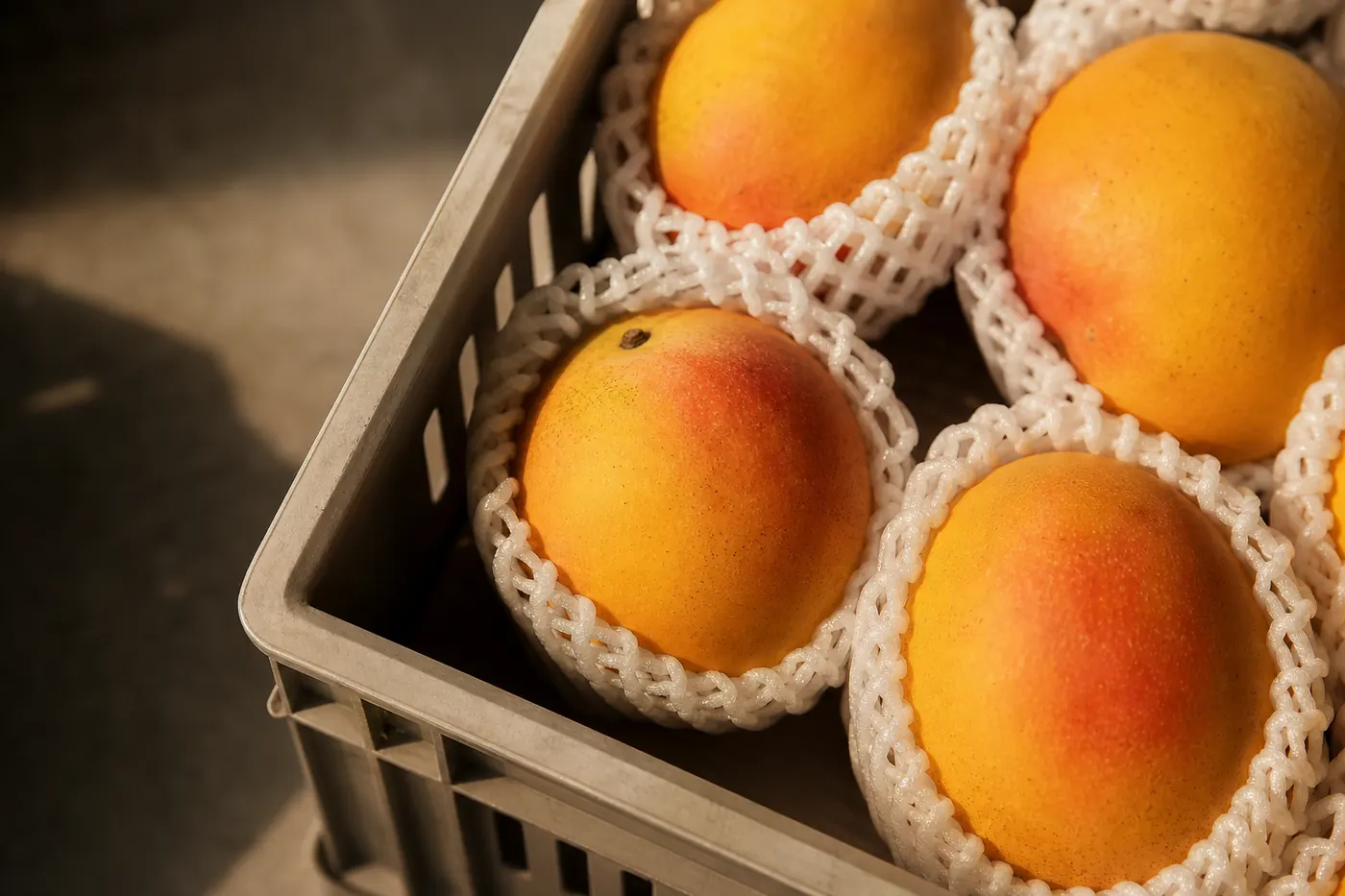
| Alphonso / Kesar mango | VHT or hot-water treatment where required | 8–12 °C | 18–24 days, or air freight |
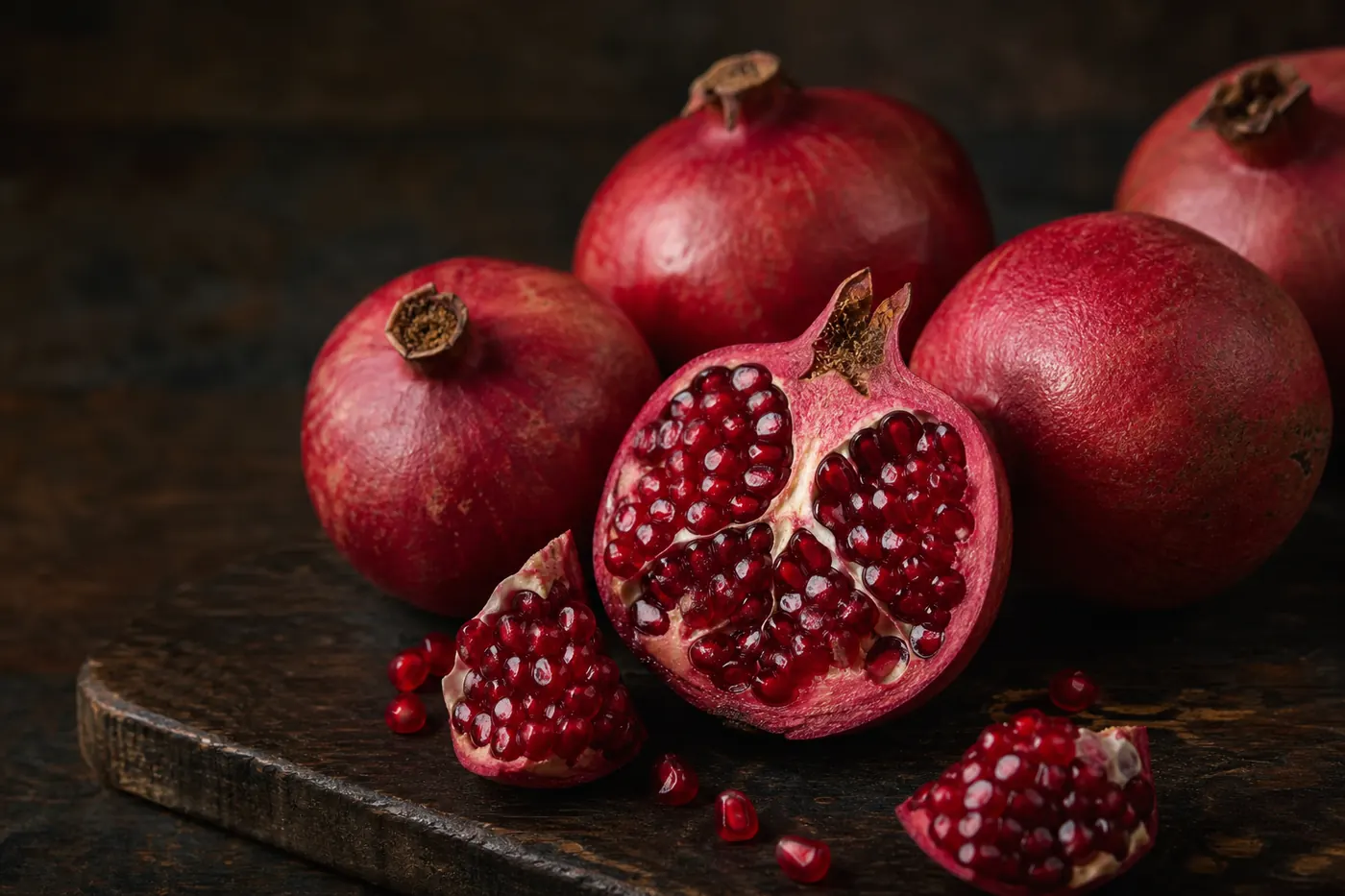
| Pomegranate - Bhagwa | Pre-cooled, fungicide dip on request | 5–7 °C | 21–28 days |
| Grapes - Thompson | SO₂ generator pad, pre-cooled | 0–2 °C | 24–30 days |
| Banana - Cavendish | Green harvest, CA container | 13–13.5 °C | 18–26 days |
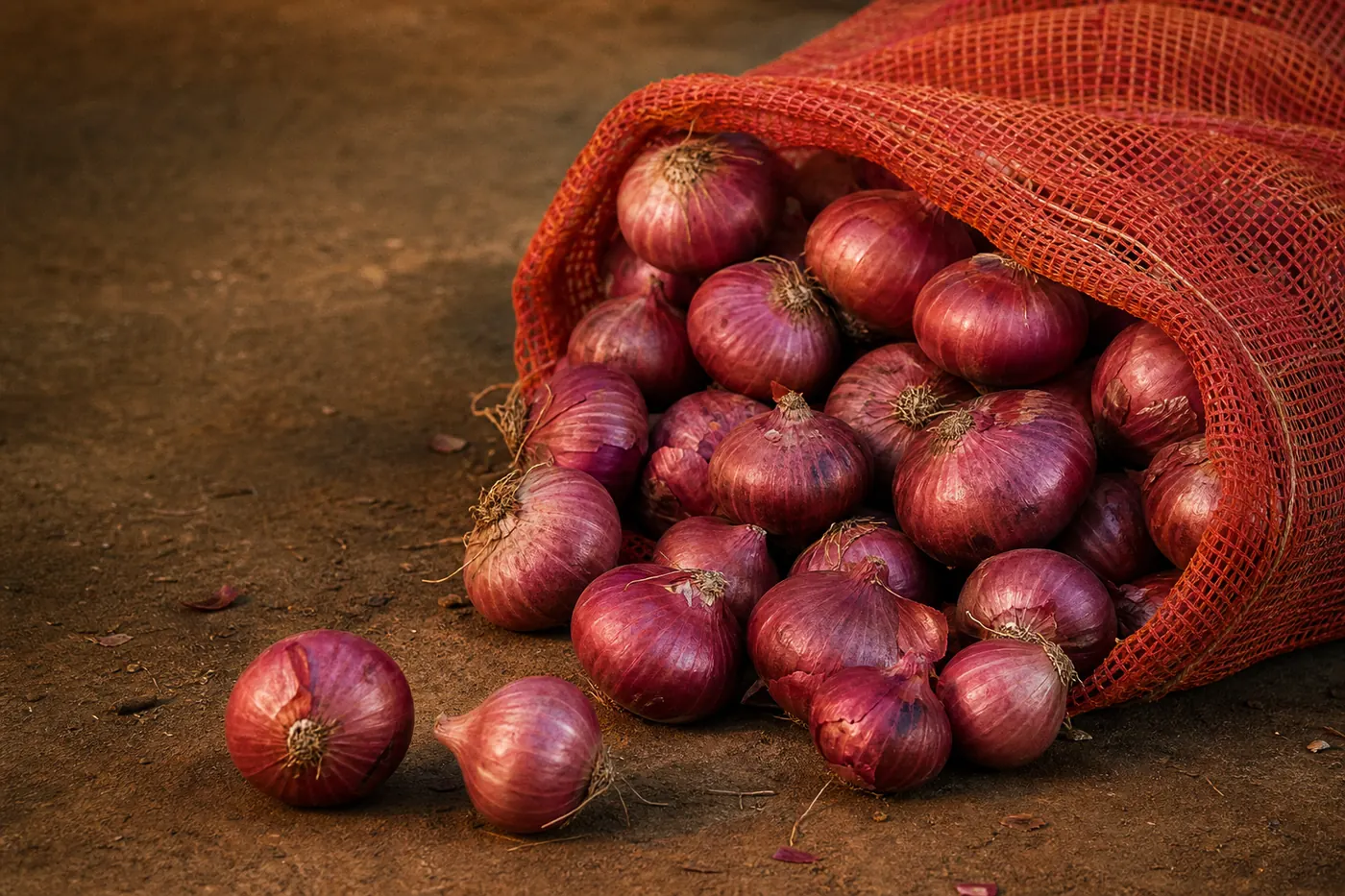
| Onion - Nashik Red | Cured and graded, ambient or reefer | 0–4 °C or ambient | 14–28 days |
| Okra / green chilli | Pre-cooled, vented cartons | 8–10 °C | Air freight preferred |
| Fresh herbs | Hydro-cooled, ice gel packs | 2–4 °C | Air freight only |
Every consignment ships with a phytosanitary certificate issued by the NPPO, plus residue and micro reports where the destination requires them. FDA prior notice and FSVP paperwork is prepared for United States shipments.
Packing & shipping
Vented, cushioned and stacked so the bottom carton survives the trip.
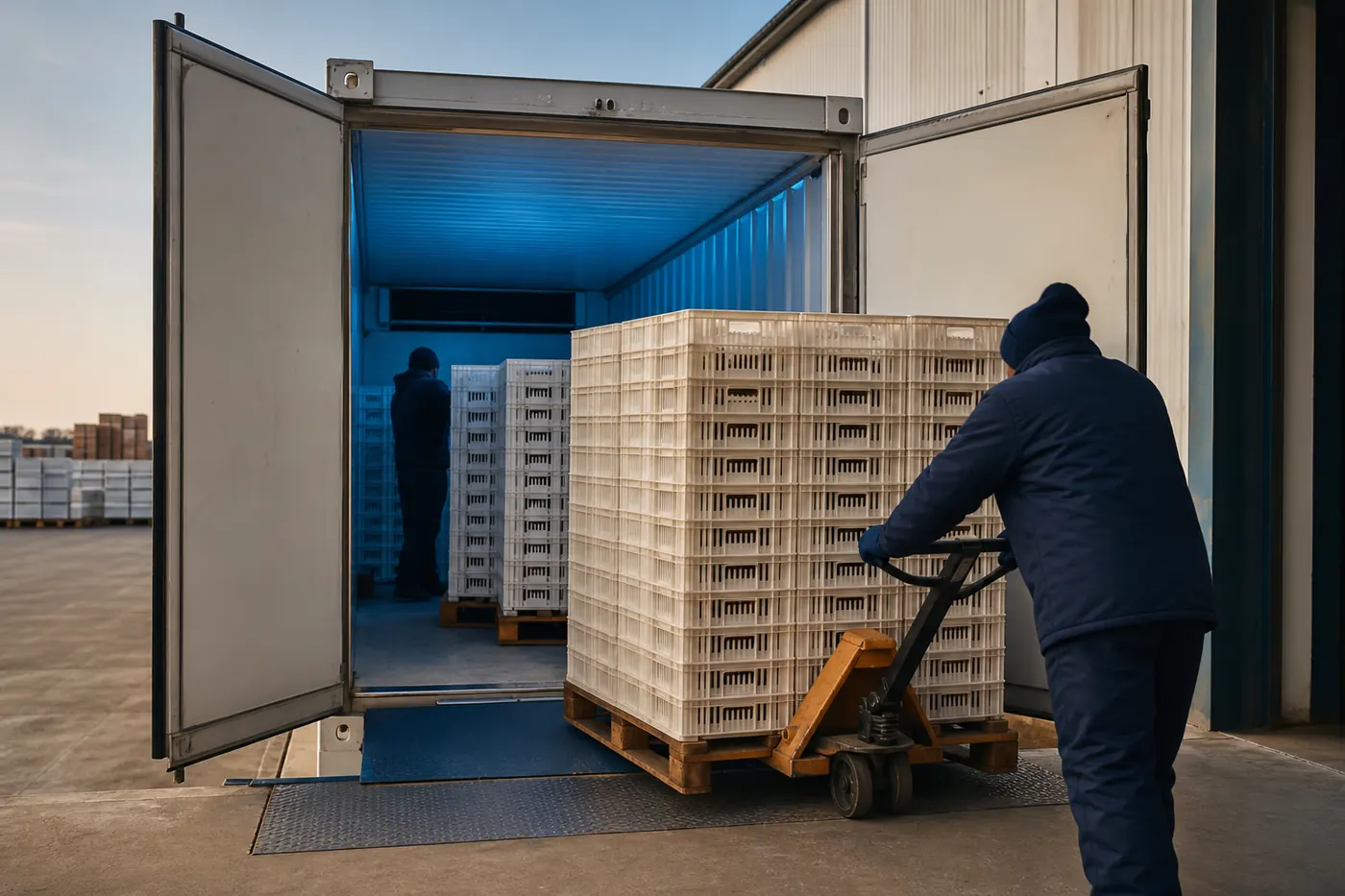
Carton strength, vent area and pallet pattern are chosen for the stack height and the transit time, not copied from the last order.
| Product | Primary pack | Per 40′ reefer | Notes |
|---|---|---|---|
| Mango | 3.5 kg CFB, foam sleeve per fruit | 4,800–5,600 kg | Single-layer tray, count-graded |
| Pomegranate | 3.5 / 4 kg CFB, tray or bulk | 18–20 MT | Corner boards, palletised |
| Grapes | 4.5 kg punnet carton, SO₂ pad | 18–20 MT | Pre-cooled before stuffing |
| Onion | 5 / 10 / 25 kg mesh bag | 26–28 MT | Ventilated stow, no plastic wrap |
| Okra / chilli | 5 kg vented CFB | By volume | Air freight for peak freshness |
| Fresh herbs | IFB-lined carton, ice gel | Air only | Same-day harvest to airport |
Next step
Send the spec. Get a real price.
Product, grade, quantity and destination port is all we need to start. Itemised quotation inside one working day.